
The History of Bandit

The History of Bandit and the Leather Chypre
Some fragrances are created to please. Others are created to provoke. Bandit by Robert Piguet belongs firmly to the second category.
Introduced in 1944 and created by the groundbreaking perfumer Germaine Cellier, Bandit rejected the conventions of traditionally feminine fragrance. Green, leathery, mossy and unapologetically assertive, it became one of the defining leather chypres of twentieth-century perfumery.
More than 80 years later, Bandit still feels strikingly unconventional. To understand why, it helps to understand the fragrance family it helped make famous.
What Is a Chypre Fragrance?
Despite the name, chypre is not a particular flower, plant or fragrance ingredient. It is a style of perfume construction. Pronounced roughly “sheep-ra,” the word comes from the French name for Cyprus. Fragrances inspired by the aromatic landscape of the Mediterranean island existed long before modern perfumery, but the category as we know it was popularized by François Coty's influential Chypre in 1917.
A traditional chypre creates tension between brightness and darkness. Fresh citrus, particularly bergamot, traditionally appears at the top. Beneath it lies a dry, earthy foundation associated with ingredients such as oakmoss, patchouli, and labdanum.
The effect is less immediately sweet than many modern fragrances. Chypres can feel elegant, mossy, dry, mysterious and sophisticated. Most importantly, the beauty of a chypre comes from contrast. It was a structure perfectly suited to Robert Piguet.
Robert Piguet: Elegance Without the Conventional
Before Bandit became a perfume, Robert Piguet had already established himself as one of Paris's important couturiers. In 1938, he opened the House of Robert Piguet at the Rond-Point des Champs-Élysées. His atelier would become influential not only because of Piguet's own designs, but because of the designers who passed through it. Christian Dior, Hubert de Givenchy and Pierre Balmain were among the talents associated with his house.
Piguet believed in refinement, but his idea of elegance was never simply polite. There was discipline in his work, but also seduction, independence, and a refusal to become ordinary. That tension would eventually find its olfactive counterpart in Bandit.
1944: The Arrival of Bandit
Bandit appeared in 1944, during the final period of the Second World War. Its introduction was as unconventional as the fragrance itself.
For a couture presentation built around a “Bad Boy” concept, Piguet sent models out wearing villain-style masks and carrying toy revolvers and swords. The fragrance accompanying this theatrical display was Bandit. The concept was mischievous, provocative, and deliberately transgressive.
And Piguet needed a perfumer capable of translating that attitude into scent. He found her in Germaine Cellier.
Germaine Cellier: The Perfumer Behind Bandit
Germaine Cellier occupies an extraordinary place in perfume history.
At a time when the profession was overwhelmingly dominated by men, Cellier established herself as one of the most distinctive perfumers of her generation. Rather than smoothing every element into perfect harmony, she became known for compositions with unusually strong personalities.
Bandit demonstrates that philosophy beautifully. Instead of beginning with a traditionally pretty floral idea, Cellier built the fragrance around contrasts.
The current Robert Piguet composition identifies leather, galbanum, and oakmoss as its key notes. Galbanum supplies an intense green quality. Oakmoss brings earthy, forest-like depth. Leather introduces darkness and attitude. The result is neither purely masculine nor conventionally feminine. It is simply Bandit.
What Makes Bandit a Leather Chypre?
A leather chypre takes the traditional contrasts of the chypre structure and introduces another dimension: leather.
Where a floral chypre may emphasize rose or jasmine and a fruity chypre may introduce plum or peach, the leather chypre pushes the composition into darker territory. In Bandit, this works especially well because leather does not sit in isolation. It collides with the piercing green quality of galbanum and the earthy character of oakmoss.
Imagine polished leather against crushed green stems and damp forest moss. There is elegance, but there is also friction. That friction is fundamental to Bandit's character. Oakmoss has historically been one of the defining materials of the chypre family, providing a dry, earthy and woody quality that helps anchor brighter notes.
Bandit takes that sophisticated chypre foundation and gives it an edge.
Bandit Was Never Meant to Be Pretty
The significance of Bandit becomes clearer when viewed in the context of fragrance expectations in the 1940s. Perfume marketed to women could certainly be sophisticated, sensual, or dramatic, but Bandit went somewhere different. It embraced bitterness, leather, and green notes that could feel sharp rather than delicate. And rather than using these elements merely as accents, Cellier allowed them to define the fragrance's personality.
Even decades later, fragrance critics and enthusiasts continue to characterize Bandit as challenging, bold and uncompromising. A 2006 review from Now Smell This described it as a fragrance “not for the timid,” while contemporary fragrance databases continue to classify the composition around its green, mossy, woody and leather facets.
That is precisely its appeal. Bandit does not ask to be universally liked.
A Fragrance Ahead of Gendered Conventions
Bandit was originally introduced within a women's fashion house, but its character has always resisted easy gender classification. That makes it feel remarkably contemporary.
Leather, oakmoss, vetiver and dry green notes later became familiar components of fragrances marketed toward men. Florals, meanwhile, were traditionally coded feminine. Bandit allowed both worlds to exist at once. Its structure can feel severe and sensual, tailored and animalic, polished and wild.
Today, that makes Bandit particularly relevant to fragrance lovers who choose perfume according to character rather than gender. Its question is not, “Who is supposed to wear this? It is, “Do you have the attitude to wear it?”
Bandit and the Evolution of the Chypre
The classic chypre became one of the major fragrance structures of the twentieth century. Over time, perfumers explored countless variations, from floral and fruity chypres to green and leather interpretations. The category itself has also evolved.
Traditional chypre perfumery relied heavily on materials such as oakmoss. Modern ingredient standards have changed how certain natural materials can be used, requiring perfumers and fragrance houses to reinterpret historic structures while maintaining their essential character. Contemporary chypres may therefore use different combinations of natural and synthetic materials to reproduce the tension between citrus brightness and a dark, mossy base.
Yet the underlying idea survives. A chypre remains a perfume built around contrast. And Bandit remains one of the clearest demonstrations of just how dramatic that contrast can become.
What Does Bandit Smell Like Today?
The current Bandit Eau de Parfum remains centered on the fragrance's distinctive leather-green identity.
Its key notes are:
Leather
Dark, smooth, and provocative.
Galbanum
Intensely green, crisp, and slightly bitter.
Oakmoss
Earthy and mossy, creating the classic chypre foundation.
Around them are smoky woods and floral accents, including orange blossom, adding dimension without taking away Bandit's characteristic edge.
The experience changes as the fragrance develops.
Its initial greenery feels almost startlingly vivid. As it settles, the leather, moss and woods become more apparent, creating a scent that feels deeper and more textured against the skin.
Who Should Wear Bandit?
Bandit is for someone who wants fragrance to have a point of view.
It may appeal particularly to those who enjoy:
-
Green and mossy fragrances
-
Leather scents
-
Dry rather than overtly sweet compositions
-
Vintage-inspired perfumery
-
Genderless fragrance
-
Unconventional signatures
-
Perfumes with a strong historical identity
Someone who prefers soft gourmands or transparent skin scents may find Bandit surprising. For the right wearer, that surprise can be precisely what makes it unforgettable.
Why Bandit Still Matters More Than 80 Years Later
Many fragrances reflect the moment in which they were created. A smaller number transcend it. Bandit belongs to the latter group because its central idea still feels relevant: true elegance does not require conformity. In 1944, that idea appeared through masked couture models and the daring imagination of Robert Piguet and Germaine Cellier.
Today, it appears in a fragrance that remains difficult to categorize and impossible to confuse with something ordinary.
Bandit does not chase modern ideas of what perfume should smell like. It never had to. It helped establish its own vocabulary.
The Legacy of a Rebel
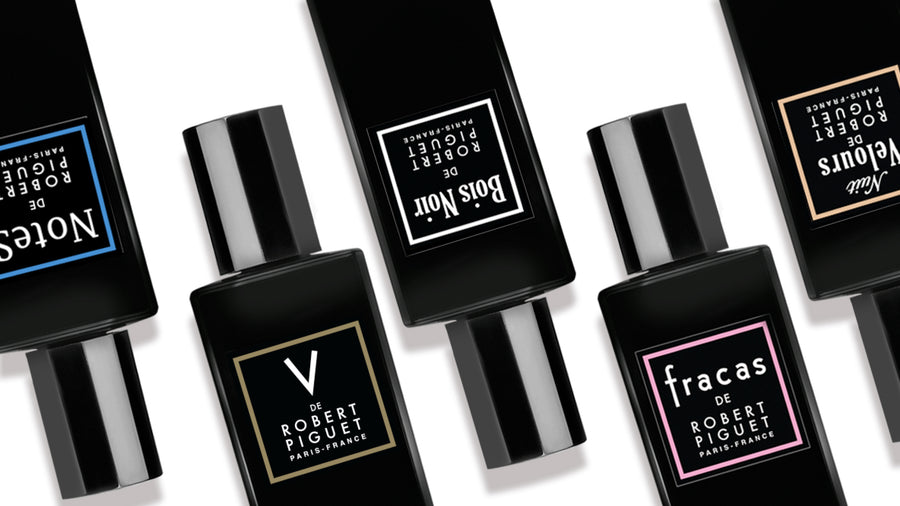
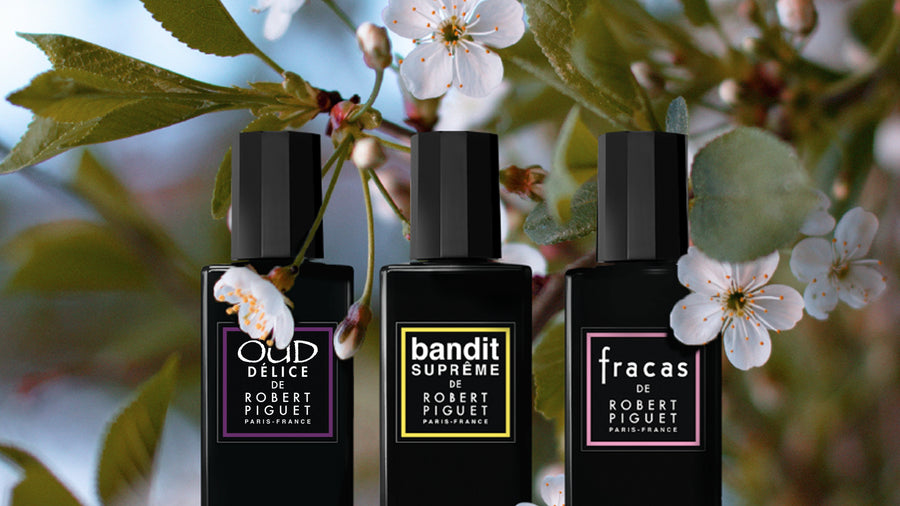
Robert Piguet would later collaborate with Germaine Cellier on Fracas, another fragrance destined to become an icon. Yet the two creations reveal remarkably different sides of Cellier's talent and Piguet's aesthetic.
Fracas revels in the extravagant sensuality of white flowers.
Bandit walks into darker territory.
Green. Moss. Leather. Smoke.
Where Fracas seduces through abundance, Bandit seduces through attitude.
More than eight decades after its debut, Bandit is certainly the “enfant terrible” of the Piguet fragrance collection.
Discover Bandit Eau de Parfum, the Leather Green Chypre created for those who have never needed permission to stand apart.